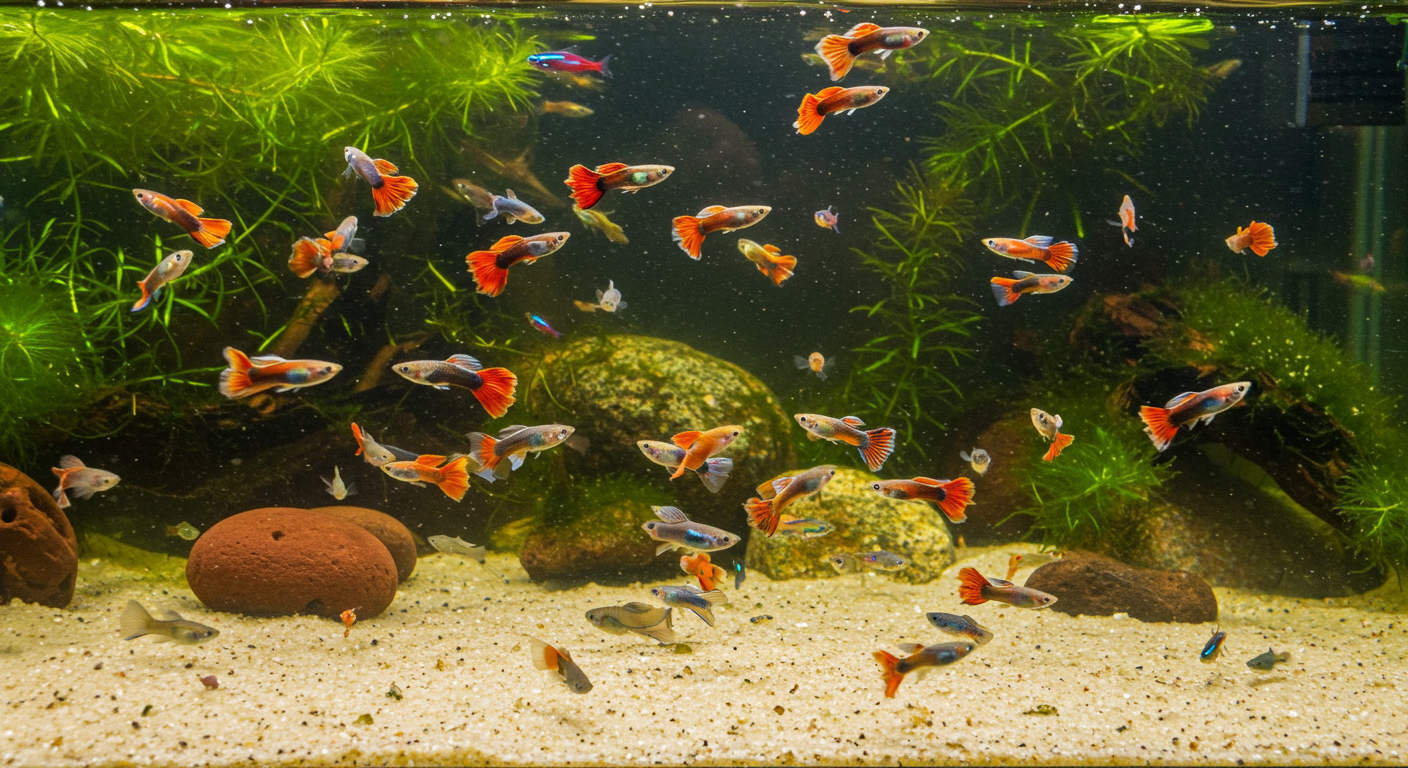
Guppies are renowned for their vibrant colors, flowing fins, and lively personalities, making them a favorite among aquarium enthusiasts. But beyond their beauty, guppies are also famous for something else: their incredible ease of breeding. If you've ever considered trying your hand at breeding fish, guppies offer a fantastic starting point. Their 'livebearer' nature simplifies the process considerably, allowing even beginners to experience the joy of watching new life flourish in their tank.
This guide will walk you through everything you need to know to successfully breed guppies, from setting up the ideal environment to caring for the tiny fry. Get ready to embark on a rewarding journey that can deepen your understanding and enjoyment of the aquatic world.
Understanding Guppy Reproduction
Before diving into the how-to, it's helpful to understand a bit about guppy biology. Guppies are a type of livebearer, meaning the females give birth to fully formed, free-swimming young (called 'fry') instead of laying eggs. This contrasts sharply with most fish species and makes the breeding process much more straightforward for hobbyists.
After successful mating, the female guppy will carry the fertilized eggs internally for a gestation period that typically lasts between 21 to 30 days, though this can vary based on water temperature and individual fish. During this time, the fry develop inside her, feeding off yolk sacs, until they are ready to be born.
Preparation is Key: Setting Up for Success
Successful guppy breeding starts with meticulous preparation. Creating the right environment and selecting healthy parent fish are crucial steps.
The Breeding Tank Setup
While guppies can and often do breed in a community tank, separating them into a dedicated breeding tank significantly increases the survival rate of the fry. A 5-10 gallon tank is sufficient for a breeding pair or trio.
Water Parameters: Guppies thrive in stable conditions. Aim for a temperature between 75-80°F (24-27°C) and a pH of 6.8-7.8. A small, gentle filter (like a sponge filter) is ideal as it won't suck up tiny fry.
Hiding Spots: Plenty of live or artificial plants (such as Java moss, anacharis, or hornwort) are essential. These provide crucial hiding spots for the fry immediately after birth, protecting them from hungry adults (including their own parents!).
Lighting: A regular light cycle (8-10 hours a day) helps maintain their natural rhythm.
Selecting Parent Guppies
Choose healthy, active guppies with vibrant colors and full fins. Avoid any fish showing signs of disease, such as clamped fins, lethargy, or white spots. For optimal breeding and to reduce stress on the female, a ratio of one male to two or three females is often recommended. This prevents the male from overly harassing a single female.
Conditioning the Parents
Before introducing them to the breeding tank, 'condition' your parent guppies by feeding them a high-quality, varied diet. This includes live or frozen foods like brine shrimp, bloodworms, and daphnia, alongside good quality flake food. A nutrient-rich diet ensures the parents are in peak health, which contributes to stronger, healthier fry.
The Breeding Process: From Mating to Birth
Once your breeding tank is set up and your parents are conditioned, it's time to introduce them. The male guppy will typically begin pursuing the females almost immediately. Mating usually happens quickly and discreetly.
Recognizing Pregnancy
After successful mating, you'll start to notice changes in the female. The most prominent sign is the development of a 'gravid spot' – a dark spot near her anal fin that becomes more pronounced and darker as she gets closer to giving birth. Her belly will also become noticeably larger and more 'squared off' as the birth approaches.
Gestation and Birth
As mentioned, gestation typically lasts 3-4 weeks. Towards the end of this period, the female may become more reclusive or exhibit signs of labor, such as shimmying or staying near the heater. When she gives birth, the fry will emerge one by one, usually over a few hours. Each tiny fry is born fully capable of swimming and fending for itself.
Caring for Guppy Fry: Ensuring Survival
The moment the fry are born is exciting, but their vulnerability means immediate attention is required to maximize their survival.
Protecting the Fry
Adult guppies, including the parents, will readily eat their own fry. There are a few ways to protect them:
Remove Parents: The most effective method is to remove the adult guppies from the breeding tank immediately after the female has given birth. The fry can then grow out safely in the dedicated tank.
Breeder Box: A simpler, though sometimes more stressful, option is to place the heavily pregnant female into a breeder box (a small plastic container that hangs inside the main tank). Once she gives birth, remove her, leaving the fry in the box until they are large enough to be safe in the main tank. Ensure the box has good water circulation.
Feeding the Fry
Guppy fry have tiny mouths and require specialized food. For the first few weeks, feed them 2-3 times a day with:
Specialized Fry Food: Commercial fry foods are available and offer a balanced diet.
Crushed Flakes: Finely crush high-quality adult flake food into a powder.
Live Foods: Newly hatched brine shrimp are an excellent source of protein and crucial for rapid growth and vibrant color development.
Regular small water changes (10-15% daily or every other day) are also vital for fry, as they are very sensitive to water quality fluctuations.
Growing Out and Next Steps
As your guppy fry grow, they will need more space and continued good nutrition. Around 3-4 weeks, you'll likely be able to start distinguishing between males and females. The males will begin to show color and develop their gonopodium (a modified anal fin used for reproduction), while females will remain larger and less colorful.
You'll eventually need to decide what to do with your ever-growing guppy population. Options include:
Setting up more tanks for specific strains or sexes.
Selling or trading them with local fish stores or other hobbyists.
Donating them to schools or community centers with aquariums.
Conclusion
Breeding guppies is a truly fascinating and rewarding aspect of fishkeeping. From observing the subtle changes in a pregnant female to watching the miniature fry dart around, each stage offers its own unique charm. With a little preparation, attention to detail, and consistent care, you'll soon be nurturing a thriving population of these beautiful fish. So, set up your tank, choose your breeders, and prepare to welcome the next generation of vibrant guppies into your aquatic world. Happy breeding!